🐾 New Substitute Groomer Available! 🐾 We’re excited to welcome our new substitute groomer. Call today to book your pet’s appointment!

Close
×

Would you like to switch to the accessible version of this site?

Go to accessible site Close modal window

Don't need the accessible version of this site?

Hide the accessibility button Close modal window
Accessibility View Close toolbar
Alessandro Animal Hospital

23932 Alessandro Blvd Suite B

Suite B

Moreno Valley, CA 92553 US

(951) 656-4455

Open mobile navigation
  • Home
  • New Patient Center
    • What to Expect
    • Veterinary Resources
    • Payment Options
  • About Us
    • Services
    • Meet Our Team
  • Special Offers
  • Contact Us
  • Blog
  • Veterinary Topics
    • Pet Health
      • Chronic Conditions
      • Digestive and Oral Health
      • Diseases and Viruses
      • Pests and Parasites
      • Orthopedics
    • Today's Veterinarian
    • Choosing Your Pet
      • Finding Your Pet
      • Cats
      • Dogs
      • Exotics
        • Amphibians
        • Birds
        • Reptiles
          • Lizards
          • Turtles
      • Small Mammals
        • Ferrets
        • Rabbits
        • Domesticated Animals
          • Prairie Dogs
        • Pocket Pets
          • Chinchillas
          • Guinea Pigs
          • Hamsters
          • Hedgehogs
          • Rats
      • Livestock
        • Cows
        • Donkeys, Horses & Mules
        • Goats
        • Pigs
        • Poultry
        • Sheep
    • Living With Your Pet
      • Bringing Your Pet Home
      • Children and Pets
      • Providing Care
      • Travel
      • Saying Goodbye
    • Newsletter Library
      • Cats
      • Tips for Pet Owners
      • Behavior & Training
      • Fleas & Parasites
      • Keeping Pets Healthy
      • Recognizing Illness
      • Nutrition & Food
      • Pet Dangers
      • Seasonal Topics
      • Visiting the Vet
      • Equine
      • Newsletter Archive
        • Fun with Pets
        • Unbelievable Pets
    • Video Newsroom
      • Health Topics
      • Technology and Science
      • Other Interests
    • Newsletter Library
    • Client Survey
    • Pets4Kids
  • COVID-19 Update
  • Home >
  • Articles >
  • Newsletter Library >
  • Equine >
  • Lameness in Horses

Lameness in Horses

  • Created in Newsletter Library, Equine
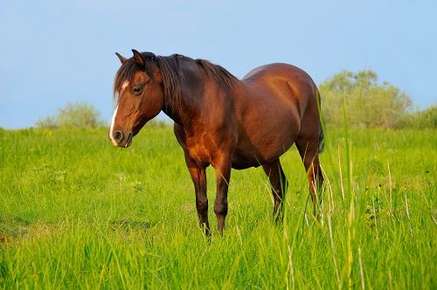
image of a horse.

Horse lameness is a condition that occurs when a horse is unable to move normally. While the majority of horse lameness is related to the foot, this condition may be caused by problems in a horse’s bones, muscles, nerves, tendons or ligaments. Repetitive injuries, infection, poor nutrition, tooth problems, and founder (also known as laminitis) are the primary causes for horse lameness. It may occur gradually over time or suddenly with little warning. In some cases, lameness may resolve itself; however, veterinary intervention is often required to proactively treat this condition and prevent additional health problems.

Lameness is the most common cause of poor performance in sport horses. Diseases or injuries to the musculoskeletal system are a major cause for poor athletic performance. The age, breed and gender of a horse are also important. Certain causes for lameness are more likely to affect certain breeds and ages of horses. Past medical history is also important in a lameness evaluation.

An equine veterinarian is trained to diagnose and evaluate lameness in a horse. The more severely lame a horse is, the more noticeable this lameness will be in the horse’s walk. A horse will be evaluated at a trot (jog), which is the optimal gait for detecting lameness. A horse will be observed from both the front and the back while the horse is moving to detect lameness.

A veterinarian will evaluate the following:
• Amount of weight bearing
• Length of stride
• Flight and landing of feet
• Carriage of the head and neck

The American Association of Equine Practitioners rates horses on the following scale for lameness:
• 0: Not detectable under any circumstances
• 1: Difficult to observe and not consistently apparent
• 2: Difficult to observe at a walk or when trotting in a straight line, but noticeable under certain circumstances (e.g., circling, inclines, weight carrying)
• 3: Consistently observable at a trot under all circumstances.

Once a horse is diagnosed with lameness, the most effective treatment options are those that directly target the underlying cause for lameness. In general, this means reducing exercise and the weight of the horse. Medications for horse lameness are non-steroidal anti-inflammatory medications that fight pain and improve joint mobility. Some injectable medications are also available to protect joint cartilage and support normal joint fluid. Hoof supplements that contain biotin, zinc, copper, complete proteins, and Omega 3 fatty acids may also be beneficial, depending on the cause for lameness.

Source:
Moore, Rustin M. DVM, PhD, DACVS; Burba, Daniel J., DVM, DACVS. “Musculoskeletal Causes of Lameness and Poor Performance in Horses.” Louisiana State University, School of Veterinary Medicine.

  • Pet Health
    • Chronic Conditions
    • Digestive and Oral Health
    • Diseases and Viruses
    • Pests and Parasites
    • Orthopedics
  • Today's Veterinarian
  • Choosing Your Pet
    • Finding Your Pet
    • Cats
    • Dogs
    • Exotics
      • Amphibians
      • Birds
      • Reptiles
        • Lizards
        • Turtles
    • Small Mammals
      • Ferrets
      • Rabbits
      • Domesticated Animals
        • Prairie Dogs
      • Pocket Pets
        • Chinchillas
        • Guinea Pigs
        • Hamsters
        • Hedgehogs
        • Rats
    • Livestock
      • Cows
      • Donkeys, Horses & Mules
      • Goats
      • Pigs
      • Poultry
      • Sheep
  • Living With Your Pet
    • Bringing Your Pet Home
    • Children and Pets
    • Providing Care
    • Travel
    • Saying Goodbye
  • Newsletter Library
    • Cats
    • Tips for Pet Owners
    • Behavior & Training
    • Fleas & Parasites
    • Keeping Pets Healthy
    • Recognizing Illness
    • Nutrition & Food
    • Pet Dangers
    • Seasonal Topics
    • Visiting the Vet
    • Equine
    • Newsletter Archive
      • Fun with Pets
      • Unbelievable Pets
  • Video Newsroom
    • Health Topics
    • Technology and Science
    • Other Interests
  • Newsletter Library
  • Client Survey
  • Pets4Kids

New patients receive $15 OFF first visit. Please print and present coupon at
time of first visit.

Print Coupon

Featured Links

Click to find out more

  • Services

    We strive to provide complete care for our patients. Learn more about all the services we provide.
    Learn More
  • Make An Appointment

    We will do our best to accommodate your busy schedule. Schedule an appointment today!
    Schedule Now
  • Special Offers

    Check out our special offers!
    View Offers

Office Hours

Our Regular Schedule

Monday:

7:30 am-6:00 pm

Tuesday:

7:30 am-6:00 pm

Wednesday:

7:30 am-6:00 pm

Thursday:

7:30 am-6:00 pm

Friday:

7:30 am-6:00 pm

Saturday:

9:00 am-5:00 pm

Sunday:

9:00 am-5:00 pm

Location

Find us on the map

Testimonials

Read What Our Clients Say

  • "Alessandro Animal Hospital is the best at what they do and make you feel right at home."
    John Doe / Moreno Valley, CA

Featured Articles

Read about interesting topics

  • March Newsletter: How to Keep Your Cat Safe When Outdoors

    Wondering how your cat can safely spend time outdoors? ...

    Read More
  • March Newsletter: How to Choose Safe Blankets for Pets

    Do you know how to pick a safe blanket for your pet? ...

    Read More
  • February Newsletter: How to Reduce Dental Anxiety in Pets

    Does your pet hate toothbrushing? These tips could reduce dental anxiety. ...

    Read More
  • February Newsletter: How to Safely Change Your Cat’s Food

    Buying a new food for your cat? Find out how to switch foods safely. ...

    Read More
  • January Newsletter: Signs Your Pet Needs a Wellness Exam

    Does your pet need a wellness exam? ...

    Read More
  • January Newsletter: How Your Veterinarian Can Help If Your Pet Ingests Something Toxic

    Has your pet eaten something it shouldn't have? Find out how your vet can help. ...

    Read More
  • December Newsletter: Signs Your Pet Needs a Professional Cleaning

    Do you know when your pet needs a professional cleaning? ...

    Read More
  • December Newsletter: Simple Ways to Keep Your Home Flea-Free for Your Pet’s Well-being

    Never want to see another flea again? Try these tips for a flea-free home. ...

    Read More
  • November Newsletter: The Importance of Bloodwork for Your Pet’s Health

    Wondering if your pet really needs bloodwork? Find out the benefits of blood tests for your furry friend. ...

    Read More
  • November Newsletter: Turkey Day Tips for Pet Owners

    Don't forget about your pet when making Turkey Day preparations. ...

    Read More

Newsletter Sign Up

Sign up for more articles

Error!

    Connect With Us

    • Copyright © 2026 MH Sub I, LLC dba iMatrix.
    • Admin Log In
    • Site Map